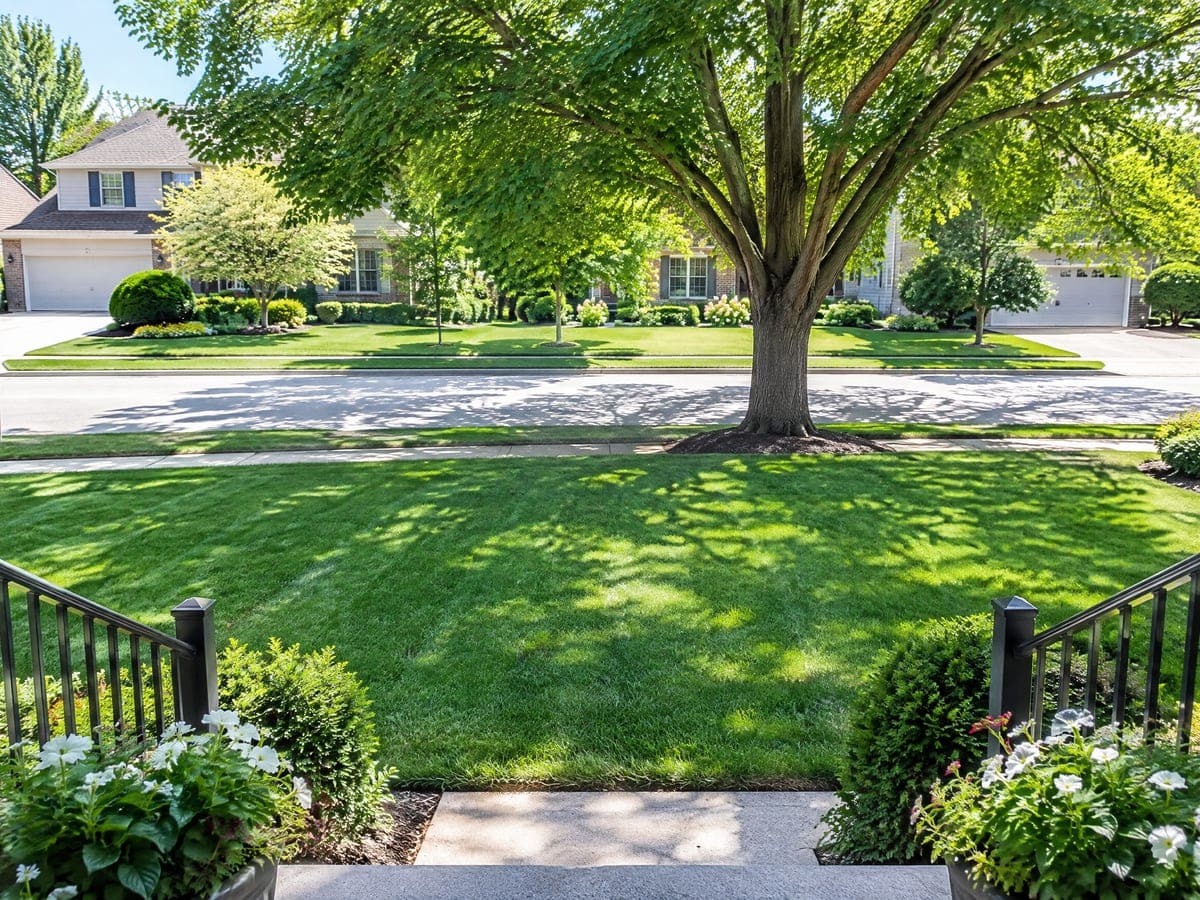
What to have ready about the tree
What the tree looks like, in a sentence. A new lean, a crack running down from a fork, a dead crown going bare, a limb down after a storm, mushrooms coming up at the base, bark falling in sheets.
Where it stands in the yard. Front yard against the house, back of the lot behind a fence, side yard between the garage and the drive. Mention which direction the tree leans, if it leans, and what is on that side.
What is under it: house, garage, fence, driveway, cars, the air conditioner at the back wall, the deck, the neighbor's shed on the lot line, a vegetable patch along the fence. Say which ones are in play.
- Any wire near the tree, including the service wire from the pole to the meter.
- A rough size, measured against the roof for height and in a hand-span for the trunk.
- The gate on the way in, and how long the walk is from the gate to the tree.
- Anything in the yard that should be left alone (a soft spot on the walk, a planted bed up against the trunk, a crumbling garage wall).
Storm damage from a recent night of weather is useful to describe too: hangers up in the crown, a trunk cracked at the fork, a limb across the roof, a tree hung on the garage. Include when the damage happened and whether anything is still moving in the wind.
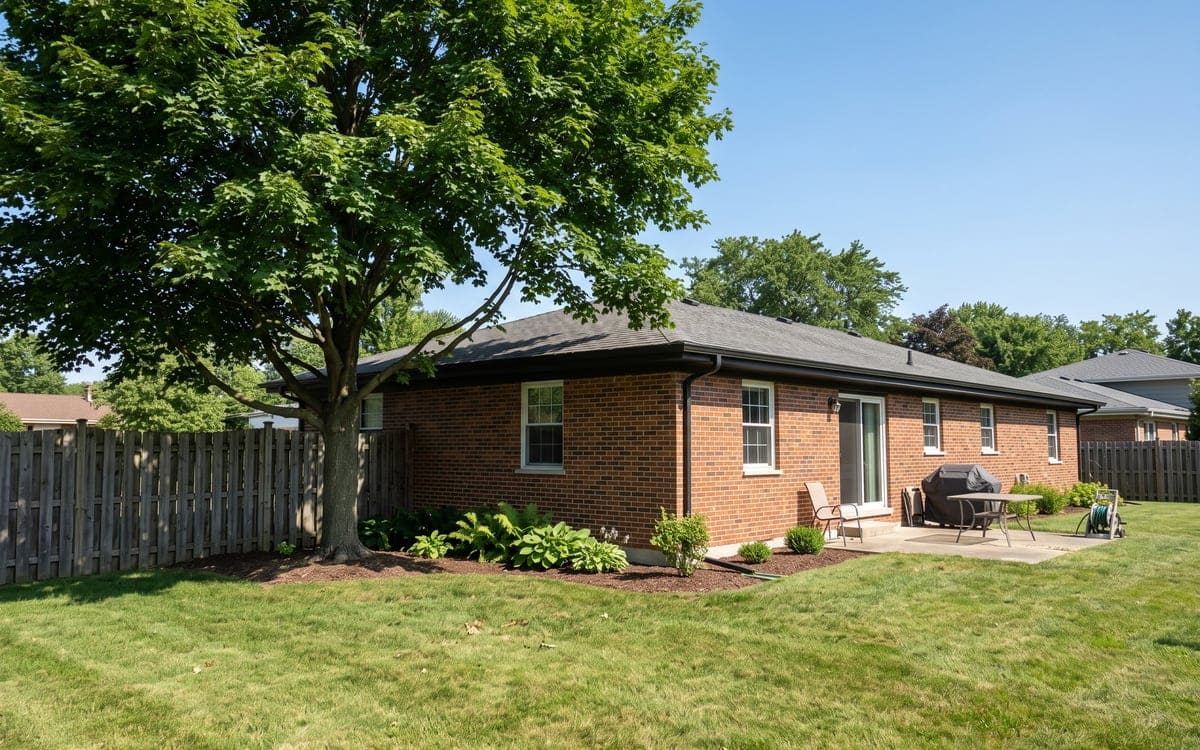
If a tree is on a wire or the house
Make the safety calls first.
- Stay back. Keep people, pets and cars clear of the tree and anything it is touching.
- If anyone is hurt, or a line is down, sparking or burning, call 911.
- For a broken limb lying on a power line, or likely to fall on one, ComEd asks that you not touch it and report it at 1-800-334-7661.1
- Then reach us about the tree.
Where we work in Hoffman Estates
Hoffman Estates and the yards nearby. Say the address and the nearest cross streets on the call. The Village maintains parkway trees only; trees on private property are the homeowner's responsibility,2 so who makes the call depends on which tree it is.