Sorting what stays from what goes
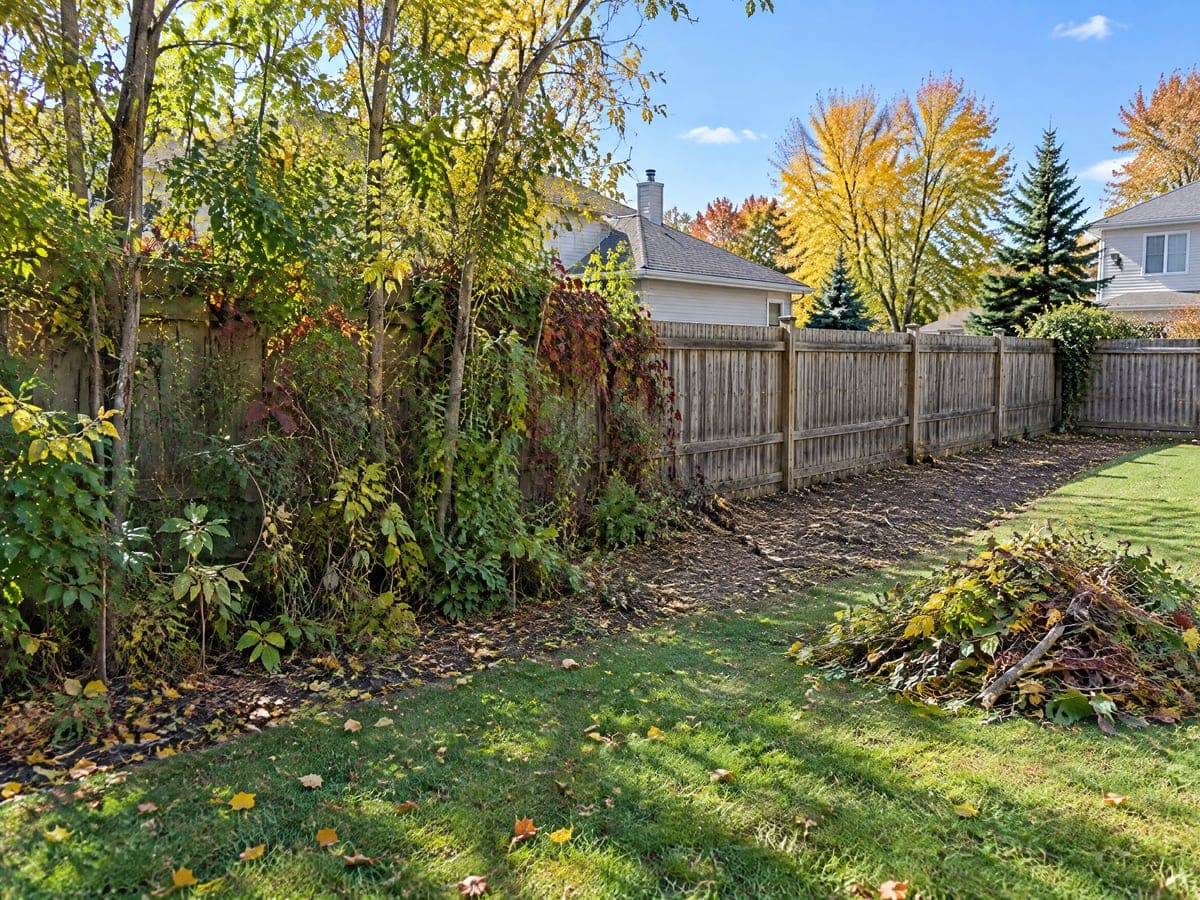
A clearing visit starts by picking out the trees the yard wants to keep. The rest sorts into brush that chips, stems that need lowering and stumps for a separate pass.
What stays: trees to keep, and room around their roots
Each kept tree needs a working radius around the base, since equipment, chips and foot traffic on a root zone are rough on a tree the yard wants to keep.
Brush, volunteer trees and vines
Volunteer trees that came up on their own under a fence or along a swale usually clear easily. Vines wound through the brush need a careful hand so they do not pull a kept tree down with them.
Stumps and roots
Clearing takes trees out at the base; grinding takes the stump out below the grass. Stump work is a separate step with its own call to grinding, and sometimes a clearing job leaves a short batch of stumps for a later visit.
Buried lines before any stump or root work
Any outdoor digging needs a locate first. Illinois law requires anyone planning outdoor digging, whatever its depth or size, to notify JULIE at least 3 days before digging, even for planting trees and shrubs.1 Utility owners mark only the lines they own; private lines such as sprinkler lines, private lighting and secondary electric lines to detached garages are not marked,1 so those runs are worth walking before the first stump goes out.
Lines utility owners mark, and lines they do not
Private lines on your lot are not marked by utility owners.
Lines utility owners mark
- Utility owners mark only the lines they own.
Private lines
- Sprinkler lines
- Private lighting
- Secondary electric lines to detached garages
Access through the gate
A path for logs out of the lot matters to the price.
| Symptom | Likely cause | What it usually needs |
|---|---|---|
| A fence line grown over | Volunteer trees and brush from years of no mowing | Clearing to the fence, keeping tagged trees |
| Volunteer trees crowding a good tree | Years of no thinning | Thinning to free the kept tree's crown |
| A thicket by a drainage swale | Water, time and no clearing | Clearing to the swale |
| Stumps left from old clearing | Earlier work that cleared trees but left stumps | A separate grinding pass |
| Brush piled from past storms | Debris never hauled | Chipping and either reuse on site or haul off |
| A back corner the mower cannot reach | Years of unmowed growth | A full clearing and a plan for the ground after |
Thinning or clearing: how we decide in the yard
When thinning is enough
- A corner with a few good trees and a lot of brush around them
- A fence line with one or two kept trees among volunteers
- A back area where the ground cover is worth keeping
When the whole area should be cleared
- A patch with no trees worth saving
- A lot where new planting will go in
- An area where every tree in it is a volunteer that will keep coming back
The walk looks at what stays, what comes out and how big the real clearing is; the number tracks the work, not the acreage.
How a clearing visit works
On the call, say what the area looks like, roughly how big, what you want kept, and what the access is like through gates and across the yard. The lot gets a walk-through before any work, with the kept trees marked. Where digging on a stump is in the plan, a JULIE request is in it too.
Clearing trees in Hoffman Estates: what the code says
The code reaches clearing work directly. Section 10-4-7 of the Municipal Code sets a 3-inch tree rule that covers land other than developed detached single- or two-family residential lots under one acre, with a tree removal permit from the Assistant Village Manager of Development Services or Village Board approval required for any tree that size or larger;2 the same approval is needed for any removal in a right-of-way. For a particular lot, the Village's Development Services is the one to ask.
On a lot where kept trees are part of a bigger project, the code keeps grading and construction equipment, fill, soil and debris out of each kept tree's root zone2 when a Tree Preservation Plan is in place.
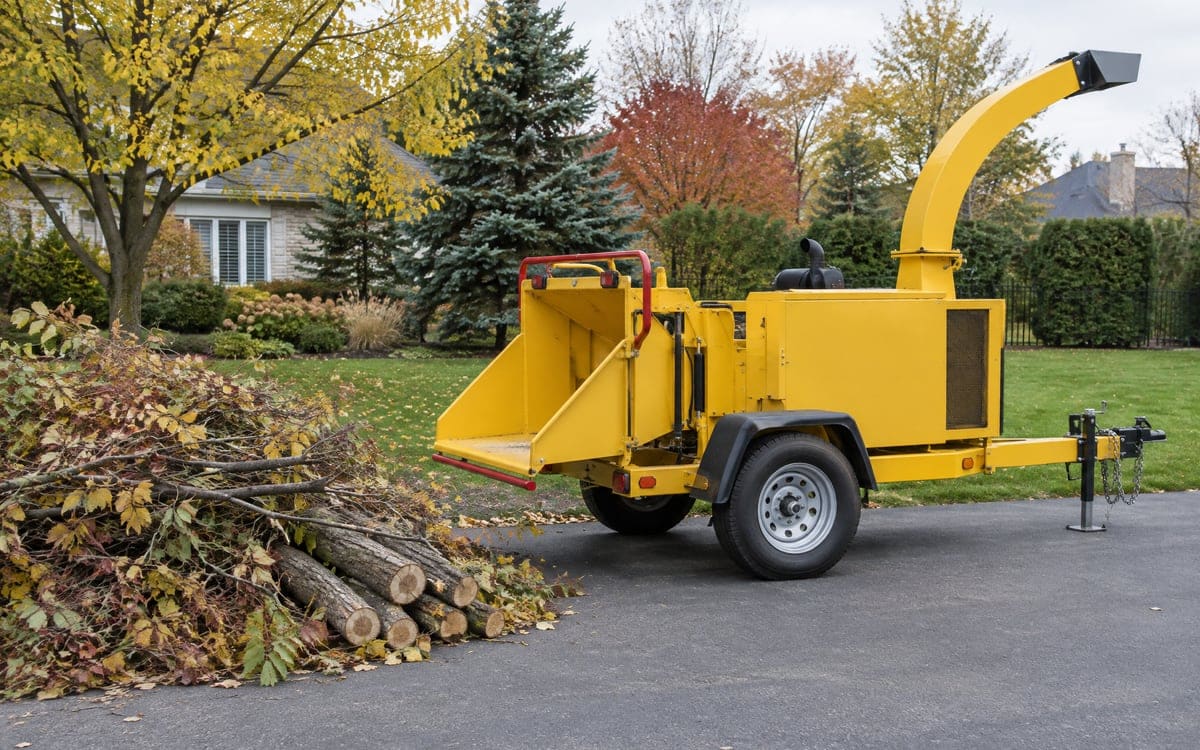
For the brush that comes to the curb, Village branch pickup takes tree branches and brush within size limits:3 up to 8 inches across and 10 feet long, no stumps, root balls, firewood or lumber. Village yard waste collection runs from April through November only,4 and brush bundles are capped at 50 pounds, 5 feet, 24 inches across and nothing thicker than 3 inches, with trunks and stumps left off. On a clearing job, those limits say which pieces could go curbside; the rest needs another way out, agreed in the price. The Village tree rules page covers the permit side and what the curb pickup rounds will and will not take.