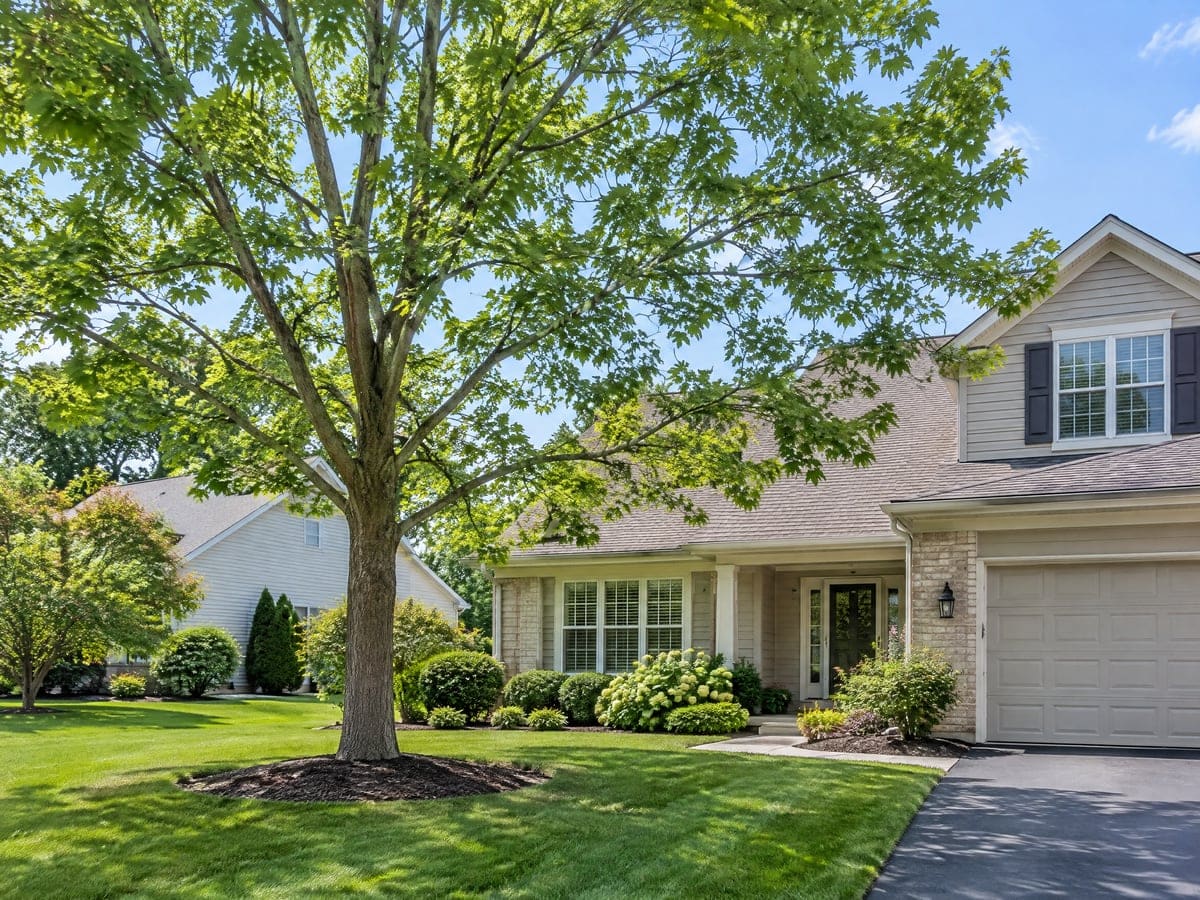
Which branches should go?
Not every long branch is a problem, and not every pruning call is a trim job.
Dead, broken and hanging branches
Dead wood breaks on calm days as well as in storms. A branch cracked near the trunk but still hanging can swing in and out of the siding for weeks before it drops. A dead, broken or hanging limb that is a hazard comes off when it has to, even on an oak; routine deadwood on an oak waits for early November to very early April.
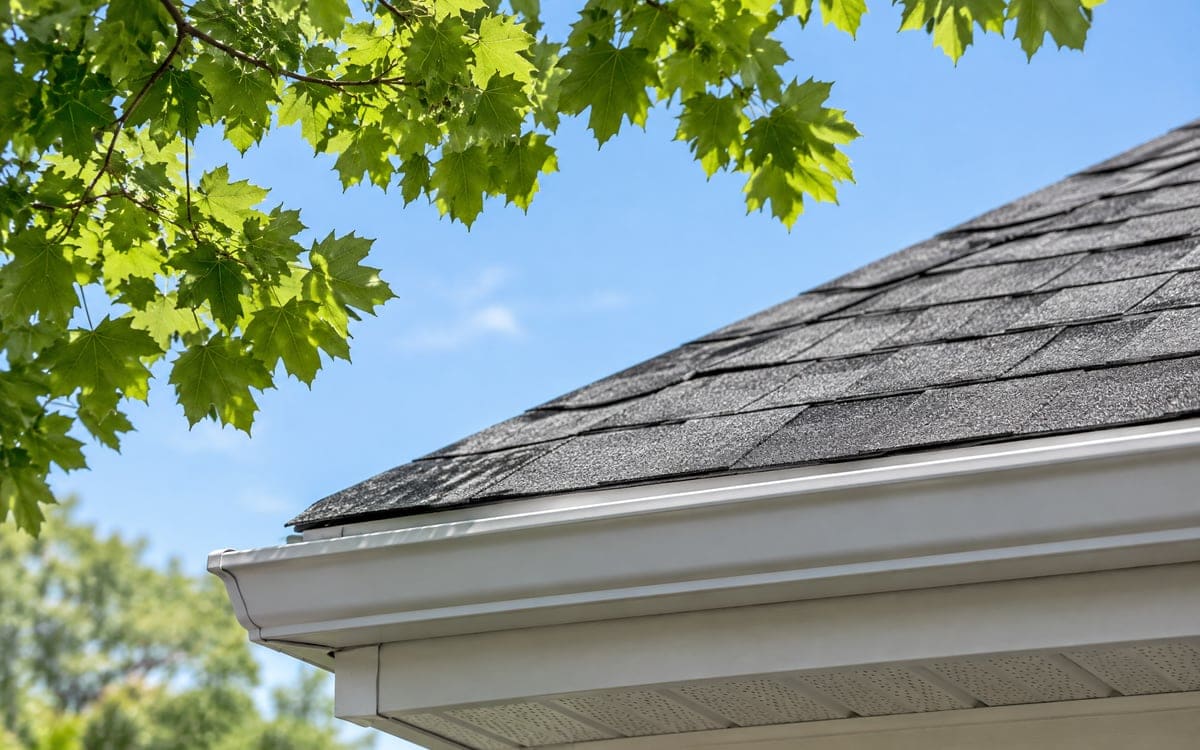
Limbs rubbing the roof, gutters or siding
A limb riding on shingles grinds through the asphalt and sheds leaves into every gutter it crosses. The right cut takes the weight off at a branch collar farther back on the limb, well short of the house wall.
Crossing branches and a crowded crown
Branches crossing in the middle of the crown rub each other's bark raw and let in decay. A crowded crown holds wind the way a sail does, so a storm loads the trunk harder than it should. Thinning out a share of the inner wood lets light and air through, and keeps the tree's natural shape.
Clearance over the driveway, walk and sidewalk
Low limbs over a driveway are a scratch on the car waiting to happen. Over a public sidewalk, the Village says homeowners must trim excessive landscape growth on their property near public sidewalks.1 Raising the crown a lift at a time keeps the tree's structure intact.
The species, and whether it is an oak
The last question before we schedule is what the tree is. For most hardwoods, dormant pruning in late fall and winter has the clearest view of the structure, but dead and hanging wood can come off any month. For an oak, timing matters as much as the cuts.
Trimming words, in plain English
Crown thinning takes a share of the inner wood out so light and air pass through. Crown raising lifts the lower limbs for headroom. Deadwood removal takes already-dead branches out. Topping cuts a tree back to stubs with no respect for the branch structure, and we do not do it: ComEd's maintenance page calls topping or rounding over a tree incorrect, saying it causes a flush of fast-growing sprouts that grow straight back into the wires.2
Two basic pruning cuts
A heading back cut and a thinning cut shape a tree in different ways.
Heading back cut
- Shortens a branch to a bud or a side shoot.
Thinning cut
- Removes a branch back to a main limb or the trunk, which lets light in and air through the canopy.
Source: The Morton Arboretum, How and When to Prune Trees (How to Prune Trees tab).
How symptoms match the usual work
| Symptom | Likely cause | What it usually needs |
|---|---|---|
| Dead branches scattered through the crown | Age, weather, pest damage | Deadwood removal; on oaks, early November to very early April unless the limb is a hazard |
| Branches on the roof | A limb outgrew its spot | Clearance cut back to a collar |
| A lopsided crown pulling one way | Lost a big limb; one side ran | Thinning the heavy side |
| Low limbs over a public sidewalk | Growth above the walk | Crown raising to clear the walk |
| A cluster of thin upright sprouts off old cuts | A tree topped years back | Thinning the sprouts out; keep the strongest, retrain the shape |
| An oak that needs pruning in summer | Dead or hanging wood only | A limited emergency cut now; the rest waits for winter |
If a tree needs more than pruning, start on when trimming will not fix it or support for a weak fork instead.
Prune it or take it down
When pruning is enough
- Most of the live wood is in good shape and the trunk sounds solid.
- The problem is clearance, deadwood, or a crown that has grown too dense.
- A branch over the house can come off cleanly at a collar without unbalancing the tree.
- The tree is young enough that trained cuts now will shape the structure for years.
For anything you are unsure about, a tree you are not sure about covers the full look.
When trimming will not fix it
- The main trunk is cracked through, or decay has left too little sound wood.
- The crown is more dead than alive.
- An oak lost to wilt is dropping leaves well before fall. See an oak lost to wilt.
- A storm already broke the tree past what pruning can shape. See a limb that already broke.
From your call to the pruning
On the call, say what the tree is doing: species, roughly how tall, which branches are the problem and what stands under them. The tree gets a look before any cut is made, with the cuts and the reasons for them talked through at the yard. For an oak, the window gets flagged on that visit.
Pruning trees in Hoffman Estates: oaks and parkway rules
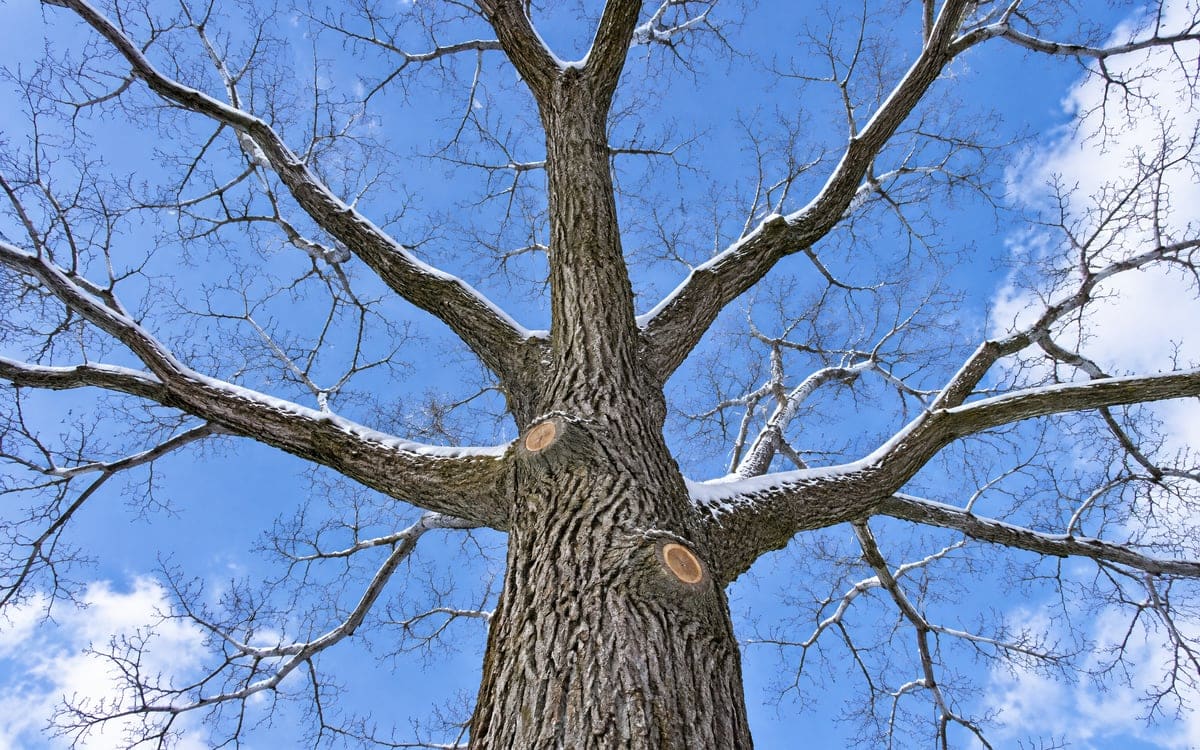
For oaks, we follow the Morton Arboretum's advice on timing: oaks should not be pruned between mid-April and mid-October, when fresh wounds attract the beetles that carry oak wilt spores; the safest time is early November to very early April.3 Oak wilt can be found in all Illinois counties,3 so the window applies to every oak in the yard. The exception is a dead, broken or hanging limb that cannot wait; those get a limited emergency cut.
For the tree in the strip between the sidewalk and the curb, the Village is in charge. The Village owns and maintains parkway trees, with routine trimming every four to seven years, mostly in late fall and winter,4 and residents should not trim parkway trees themselves.5 For a broken or hanging parkway branch, the Village asks that it be reported to Public Works.
For a tree reaching into a ComEd power line, we do not touch it. The Village forestry page sends residents to ComEd's Tree Trimming Assistance program.1 For the service wire from the pole to the meter, ComEd will drop or de-energize that wire at no charge so a homeowner's contractor can trim near it, scheduled through 1-800-334-7661.6 See the tree rules page for parkway, private and ComEd rules together.